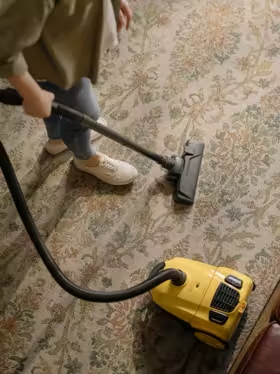
St Marks is unassigned, and the RAMS
is what they asked for in the tender.
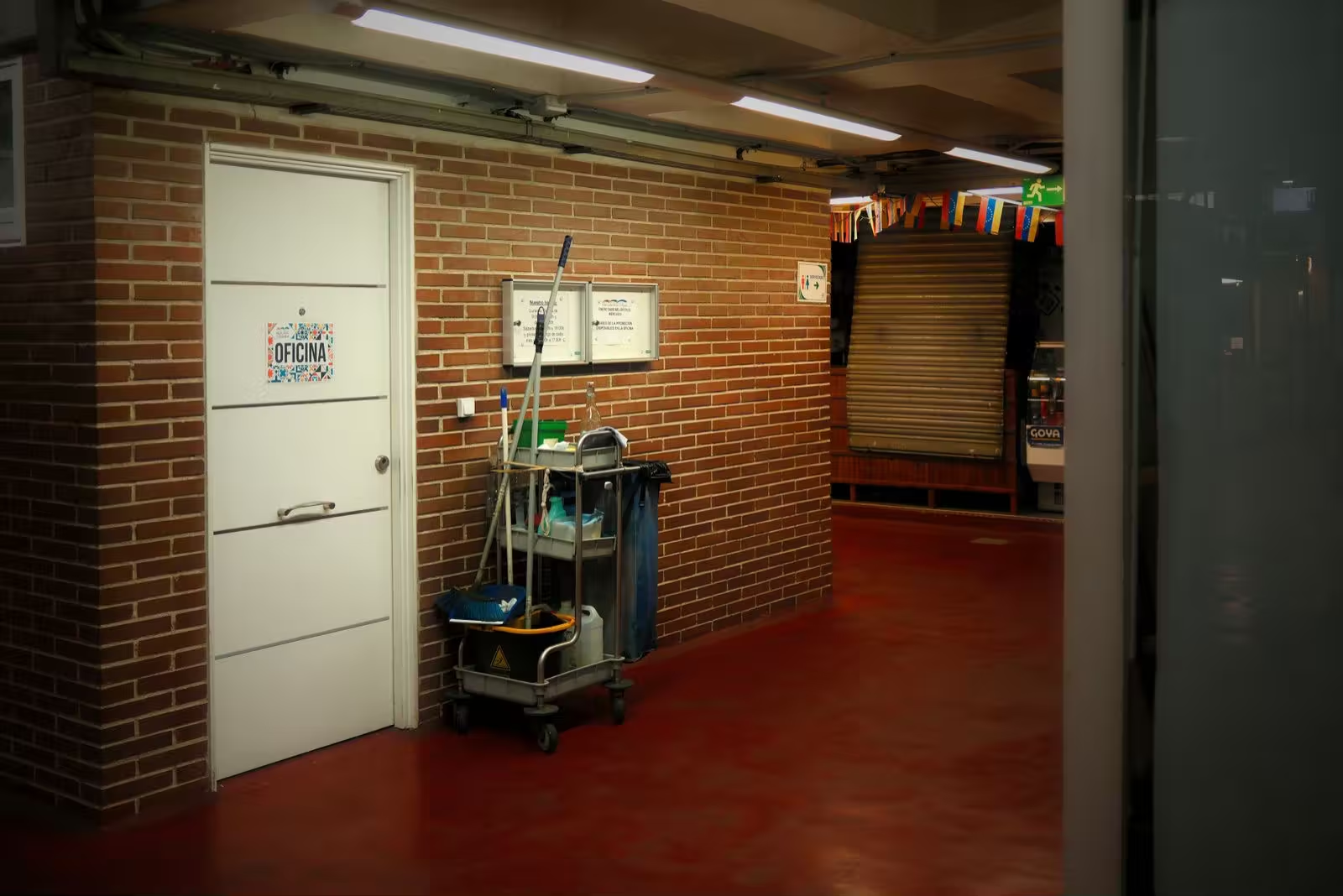
CleanFlo is the multi-site rota, the RAMS and the VAT invoicing for UK contract cleaners.
Built in Cornwall. No signup needed to look: the demo is a real CleanFlo company, open to anyone.
Commercial cleaning software: offices, clinics, the job after five.
Two to thirty cleaners, several sites, and a client who wants the paperwork before they sign. If you are bidding national FM with a quarterly review meeting, the facilities page is the one for you.
The unassigned site is the first row
A job with nobody on it sits at the top of the dashboard before anything else, whether it is one office or the fourth site this week. Access, key holder, alarm code and the client contact sit on the site, not in your head.
Rotas across as many sites as you hold
Assign a team to a site, see availability and time off before you commit, and get a double-booking warning before you save rather than after the phone call. Unlimited locations, and the bill does not move.
The A4 they ask for before they sign
Rate each hazard on the 5×5, likelihood against severity, before and after controls, and hand over a site risk assessment that prints to a clean A4 page. Method statements, incidents by severity, and audits scheduled before they lapse.
One invoice across a month of visits
A month of work for one client becomes a single itemised VAT invoice with your sort code, account number and a unique payment reference on it, rather than fourteen paid at fourteen different times. Overdue reminders go at 7, 14 and 30 days.
A specification per site, on the phone
A dental practice, a warehouse and an office are not the same clean. The specification is a job template you build once and apply to that site’s cleans, and the cleaner sees it with the address and the access notes on their own phone, in their own language, with no signal in a basement.
A login for the client, if they want one
Commercial clients sometimes do. Their schedule, their visit history, their invoices and payment status, and a request for a clean that lands in your rota as a job rather than in your voicemail at nine.
The file on each cleaner
Contract, right to work, DBS check, training, hazardous waste handling and insurance, each with a reference and an expiry date. Anything expired or expiring within thirty days is flagged against that person before a client asks.
The kinds of site this runs
Two of these have a page of their own:
- Soft FM, multi-site Bidding for facilities work with a review meeting every quarter, where the deliverable is evidence rather than effort.
- Window cleaning contracts Shopfronts and offices on a four-weekly or six-weekly cycle, priced per visit against a written specification.
Builders cleans are worth taking and are not a separate product: an hourly job of unknown scope, with a checklist and photographs, quoted by the hour with the scope written down. If one-off work is most of your book, the one-off and specialist cleans page is the one written for it.
A specification per site, and what carries it
A dental practice, a warehouse and a solicitor’s office are not the same clean, and the specification is what a commercial client is actually buying. It is also what the argument is about when something goes wrong, which is why it has to exist somewhere both you and the cleaner can see it.
In CleanFlo the specification is a job template: a name, a length, a price, the services on it and a checklist of tasks, built once and applied to that site’s cleans as you create them. The cleaner meets it as a list to work through on their own phone, alongside the address, the access notes and the key and alarm codes held against the site, in whichever of twenty-seven languages their phone is set to, and stored on the device so a plant room with no signal changes nothing.
One honest limit. The checklist belongs to the clean rather than to the site record, so editing a recurring series carries the title, the cleaner, the time, the length, the price and the notes to every future visit, and does not carry a changed checklist with it. A specification that has genuinely changed is applied by re-templating the cleans from that point on. It is a minute of work rather than none, and it is worth knowing before you buy.
A written specification is also the half of a tender most operators do worst. Our office cleaning checklist is the room-by-room shape most commercial specifications take, and the cleaning contract template is where the scope, the hours and the notice period get written down.
See it with your own jobs
14 days free, full access, cancel anytime. Unlimited staff, clients and locations.
Start free trialno card to start · 14 days free · £19.99/mo after · cancel anytime · or open the demo
Send us what you have and we will import it for you, free, during the trial. Ask us to import it
The evidence a client asks for before they sign
Winning a commercial contract is rarely about being the cheapest. It is about being the one whose paperwork arrives attached rather than promised, and the documents asked for are consistent enough to list: a site risk assessment, a method statement, insurance, and evidence about the people who will be on site.
The risk assessments are built on a 5×5 matrix, likelihood against severity, with the controls recorded and the residual score after them, and a hazard nobody has scored is shown as unscored rather than quietly counted as low. Incidents are logged by severity with a RIDDOR reading beside them, which advises and never reports: nothing here submits anything to the HSE, and the duty stays the employer’s. Audits are scheduled per site and flagged when they go overdue, and a live 0 to 100 compliance score on the dashboard says what is still outstanding.
All of it comes out as one document. The tender pack prints the company’s own health and safety statement, the risk assessments with their risk levels, the audits, the compliance documents and the active staff, each section rendered even when there is nothing in it, because a section that silently disappears reads as concealment to the person assessing you. What it deliberately leaves out is hazard-by-hazard detail and the incident log: a tender pack is a summary a client judges a contractor by, not the operational record behind it.
If you are pricing a tender rather than writing one, the tender calculator works out the hours and the rate before you commit to a figure, and how to win cleaning contracts is the long version of everything above.
Managing agents, and thirty small sites under one client
Block cleaning is a different shape of contract from an office. The client is a managing agent or a residents’ management company, the work is a stairwell, a bin store, a lift lobby and a car park, the visit is twenty minutes, and there are twenty-nine other blocks exactly like it under the same contract.
The record follows that shape. One client holds as many locations as the contract has blocks, and there is no cap and no per-site charge: the locations are unlimited on the same £19.99. Each block carries its own address, access notes, key holder, alarm or door code and client contact, so a cleaner covering for somebody is not ringing you to ask which gate.
The specification is a job template built once and applied to that block’s cleans, and the difference between a block with a bin store and a block with a car park is two templates rather than a note in a spreadsheet. The same limit applies here as everywhere: a changed specification is applied by re-templating the cleans from that point on rather than by editing the series in one go.
The visit record is what a managing agent is really buying, because they are asked by leaseholders whether anybody came. Each clean carries who attended, when they started and finished, the checklist as they ticked it and up to twelve photographs, and the client can be given a login that shows their schedule, their visit history and their invoices. What there is not is a signing-in sheet: nothing prints a sheet for the lobby wall and nothing captures a signature on site. The record is the job, the stamps and the photographs.
The money side is the part that decides whether the contract is worth having. A month of work across thirty blocks becomes one itemised VAT invoice for the agent, raised from the completed cleans rather than retyped, with your sort code, account number and a unique payment reference on it, and each client billed by its own call so one failure neither aborts the run nor double-bills anybody.
For the specification itself, our cleaning specification template is the shape most block specs take, and the tender calculator works out the hours and the rate across a portfolio before you commit to a figure.
Surgeries, schools and care homes: services, not a sector module
Most contract cleaners end up with a dental practice, a primary school or a care home on the book, and they are priced and specified differently from an office. CleanFlo ships them as services: the starter catalogue offers a Healthcare & Medical shelf you tick from and edit before anything is added, and schools and colleges run on the Commercial & Office shelf, with a term-time pattern booked as dated visits because the repeat is weekly, fortnightly or monthly and a school year is neither.
What CleanFlo does not do is any sector scoring scheme. The health and safety module is the general one described above: a 5×5 risk assessment, method statements, incidents by severity, scheduled audits and a 0 to 100 compliance score built from what is on file. It does not implement the national cleanliness standard for healthcare premises, Star Hygiene ratings or a CQC evidence framework, and it produces no score any of those bodies would recognise. If your contract is judged against one, that scoring lives somewhere else. The facilities management page says the same thing for a soft FM portfolio.
DBS, right to work and the training register
Schools, healthcare sites and anywhere with children or vulnerable adults will ask who is coming and what has been checked about them, and a managing agent will ask the same question in a shorter form.
Each cleaner’s record holds documents by kind: contract, right to work, DBS check, certification, training, hazardous waste handling and insurance. A reference number and an expiry date are a complete record on their own, so recording that an enhanced DBS exists and when it runs out uploads nothing at all; attaching the file is optional. What the expiry date buys you is the warning: anything expired, or expiring within thirty days, is flagged against that person rather than found when a client asks.
Right to work is treated differently from everything else, on purpose. A passport is not evidence that anybody checked it, and it is the checking that protects the employer, so a right-to-work document with no dated check carries its own warning and is the one alert on the shelf that never clears itself by the passage of time.
Across the team, the training register answers the question a client actually asks, which is not "what does this person hold" but "who holds COSHH, what is lapsing, and who has not got it". It lists the certificates by person, marks the ones expired or expiring, and names the people missing each kind.
Employment type, and two things CleanFlo does not do
A cleaner’s record carries an employment type: employee, worker, self-employed, agency, or not recorded, and not recorded is a normal state rather than a form you must fill in before the app will show you anything. Everything downstream treats a missing value as missing rather than guessing: no fixed hours, no overtime rule, and no figure that pretends to know.
What it does not do is the tax machinery that goes with a subcontracted workforce. There is no Construction Industry Scheme handling, no CIS deduction and no monthly return, and there is no self-billing: CleanFlo will not raise a self-employed cleaner’s invoice to you on their behalf. If your model is a book of subcontractors billing you every month, that part stays where it is today.
The employment status question itself is worth getting right before it is asked for you. Are your cleaners employed or self-employed walks the tests and links HMRC’s own tool.
One invoice for a month of visits
Commercial billing is not the same shape as domestic billing. A client with four sites cleaned three times a week does not want a hundred and fifty invoices; they want one, itemised, on thirty-day terms, with a purchase order reference if they use them.
The monthly run does that. Pick the period, see every client with completed unbilled work in it, review job by job what is going to be billed, raise the lot as drafts and then issue and send them without leaving the screen. Each client is billed by its own call, so one client’s failure neither aborts the run nor rolls back a client that has already gone out, and no clean can be billed twice: the claim on the work happens inside the same database transaction that writes the invoice.
Every invoice carries your sort code, account number and a unique payment reference, and VAT only if you told us once that you are registered. What is not paid is chased by email at seven, fourteen and thirty days overdue, once per stage, and the chase stops when you record the payment.
Frequently asked questions
01 Can I run several sites on one rota without double-booking a cleaner?
02 Does it produce the RAMS a facilities manager asks for before signing?
03 Can I show a client that my cleaners are DBS checked and trained?
04 Can I invoice a client for a month of visits across several sites in one go?
05 Can each site have its own cleaning specification?
06 Does CleanFlo handle CIS or self-billing for subcontracted cleaners?
07 Is CleanFlo suited for national facilities management bids or window cleaning contracts?
Put one awkward week through it.
14 days, every feature, no card to start. Take the week the tender went in on the Wednesday, a cleaner rang in sick on the Thursday, and the month still had to be invoiced on the Friday. See what the software does with it before you decide.
Send us what you have and we will import it for you, free, during the trial. Ask us to import it
£19.99 a month, flat · Unlimited staff, clients and locations
- Data held in Ireland, encrypted at rest
- Export everything to CSV, any time
- Cancel from settings, no notice period
- Live system status
- 01736 396654 CleanFlo, Rocky Field Close, St Ives, TR26 2FY